Post-Hailstorm Roof Damage: Why Inspect Without Leaks
After a hailstorm, your roof can be damaged even if it’s new and not leaking. Here’s why a professional inspection is so important and what we look for.
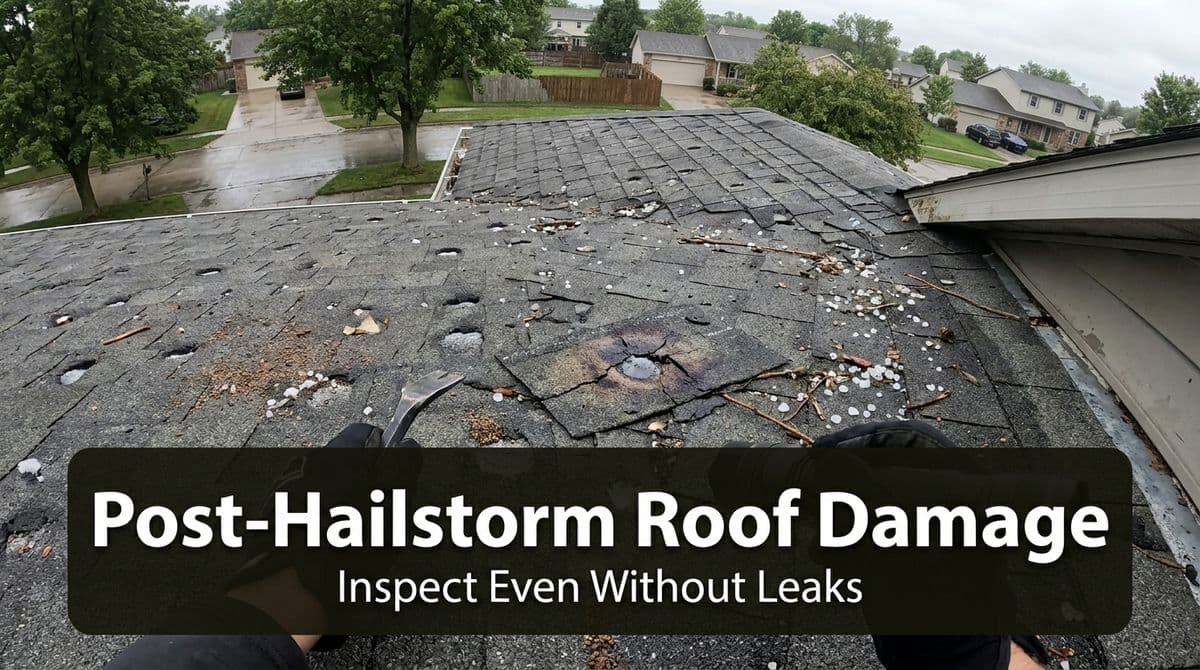
After the Storm: A Call About a “Perfectly Fine” Roof
We recently got a call from a homeowner — let’s call him Jason — right after a nasty late-April hailstorm. Jason told us his three-year-old roof looked fine from the ground and he wasn’t seeing any leaks at all. But he’d heard that “bruising” from hail could cause leaks months later, especially on newer roofs, and he wanted us to come take a look.
That question comes up a lot after big storms: “If my roof isn’t leaking, do I really need an inspection?” With Jason’s permission, we scheduled a morning visit, planned to get up on the roof, take photos, and then walk him through what we did or didn’t find. His situation is a perfect example of why an inspection matters — even when everything seems okay.
Why Hail Damage Doesn’t Always Show Up As a Leak
When we talked with Jason, he said exactly what we hear all the time: “We haven’t had any problems, but I understand there could be damage that causes a leak within the first year or something.” He was right on the money.
Here’s what happens during a hailstorm, especially on a newer roof:
- Hailstones bruise shingles. They may not crack through right away, but the impact can knock off protective granules and crush the asphalt layer underneath.
- UV and rain finish the job. Once granules are gone, the sun dries and weakens the exposed asphalt faster. Over time, that spot becomes brittle and can crack.
- Leaks often show up later. The roof might shed water just fine today, but as those bruised areas break down, tiny openings allow water to work into the underlayment and decking.
On a three-year-old roof like Jason’s, you’d never expect leaks so soon under normal conditions. But hail can shorten the life of even a brand-new roof if that damage is left unaddressed.
Newer Roofs: Why You Shouldn’t Skip the Inspection
We hear this a lot: “The whole house is only a few years old. Surely the roof is fine.” That was Jason’s situation — his entire home, including the roof, was just about three years old.
Here’s why newer roofs still need a professional hail inspection:
- Newer shingles are still under warranty. If hail damage isn’t documented and repaired in a timely manner, it can complicate future warranty or insurance claims.
- Insurance timelines matter. Many policies expect you to report hail damage within a certain period after the storm. Waiting until you see a leak can put you outside that window.
- Damage is often purely cosmetic at first. What starts as granule loss and bruising may not leak for months. Fixing it early is far cheaper than replacing rotten decking or interior drywall later.
In other words, a new roof doesn’t make you immune to storm damage — it just gives you more to protect and more reason to act quickly.
Simple Ground-Level Checks You Can Do Yourself
Before we ever get to a home, we often walk customers like Jason through a few safe, ground-level checks. These don’t replace a professional inspection, but they can tell you if calling us out is a smart move.
From the ground, you can look for:
- Granules in the gutters or at downspout exits. After a hailstorm, heavy shingle granule loss often shows up as sand-like debris on the ground or in your gutters.
- Dents on soft metals. Check metal gutters, downspouts, fascia, window screens, and even your mailbox. If those are dinged up, your shingles likely took a beating too.
- Odd-looking “polka dots” on shingles. From the yard, you might see dark spots or areas where the color looks uneven — those can be hail bruises.
- Damage to roof accessories. Look at vent caps, attic vents, and any visible flashing. Crushed or dented accessories are red flags.
If you notice any of these signs — or you simply know there was a “monstrous” hailstorm in your neighborhood — it’s worth having us come out, even if your ceilings are still dry.
Common Myths About Hail Damage (And Why They’re Risky)
Jason came to us with good instincts, but we still run into a few myths that can cause homeowners to delay calling.
“If it’s not leaking, it’s not damaged.”
As we explained to Jason, leaks are often the last stage of hail damage, not the first. By the time you see a stain on your ceiling, water may have been getting in for months.
“My roof is new, so hail can’t hurt it.”
Newer shingles can actually show clearer hail bruises because there’s more granule coverage to lose. A three-year-old roof can be a great candidate for an insurance-paid replacement if damage is significant — but only if we document it in time.
“I’ll just wait until my neighbor files a claim.”
Every roof is different. Pitch, orientation, shingle type, and surrounding trees all affect how much damage you get. Your neighbor’s experience is helpful, but it’s not a guarantee your roof is fine — or damaged — in the same way.
What to Expect When We Inspect a Hail-Damaged Roof
When we set Jason’s appointment, we did exactly what we do for every homeowner: we scheduled a morning window, let him know we’d text him when we were about 30 minutes out, and explained that he was welcome to be home so we could review everything together.
Here’s our typical hail inspection process:
- Initial walk-around. We start on the ground, looking at gutters, siding, window screens, and any soft metals for impact marks.
- Roof inspection. We safely access the roof and check multiple test squares on each slope, marking and photographing hail hits, missing granules, cracked shingles, and damaged vents or flashing.
- Attic or interior check (if needed). If we suspect hidden leaks, we may ask to look in the attic for moisture, staining, or daylight peeking through.
- Photo review with you. We come back down, show you what we saw (or didn’t see), and explain in plain language what it means for your roof’s lifespan.
- Insurance guidance. We can talk through your next steps, like checking whether you have a 1% or 2% deductible and whether the damage appears to meet typical insurance thresholds.
By the end of the visit, you’ll know whether your roof is in good shape, needs repairs, or is a candidate for a full replacement through your insurance — and you’ll have photos to back it up.
Why Calling Sooner Is Almost Always Better
For homeowners like Jason with a relatively new roof, the stakes are high. Ignoring potential hail damage now can mean:
- Out-of-pocket repairs later for interior leaks and wood rot
- Denied or reduced insurance coverage if you wait too long
- Shortened overall roof life, forcing you into an early replacement
On the other hand, catching damage early can:
- Lock in your claim within your policy’s time frame
- Help you plan repairs or replacement before problems show up inside
- Protect the investment you’ve already made in a newer roof
If your area just went through a big hailstorm — even if your roof is only a few years old and you don’t see any leaks — we strongly recommend scheduling a professional inspection. We’ll get on the roof so you don’t have to, document what’s really going on up there, and give you honest recommendations about what to do next.