Homebuyer’s Roof Guide for the Option Period
Under contract and worried about roof inspection findings? Learn what hail damage, worn shingles, exposed fasteners, and missing flashing really mean in your option period.
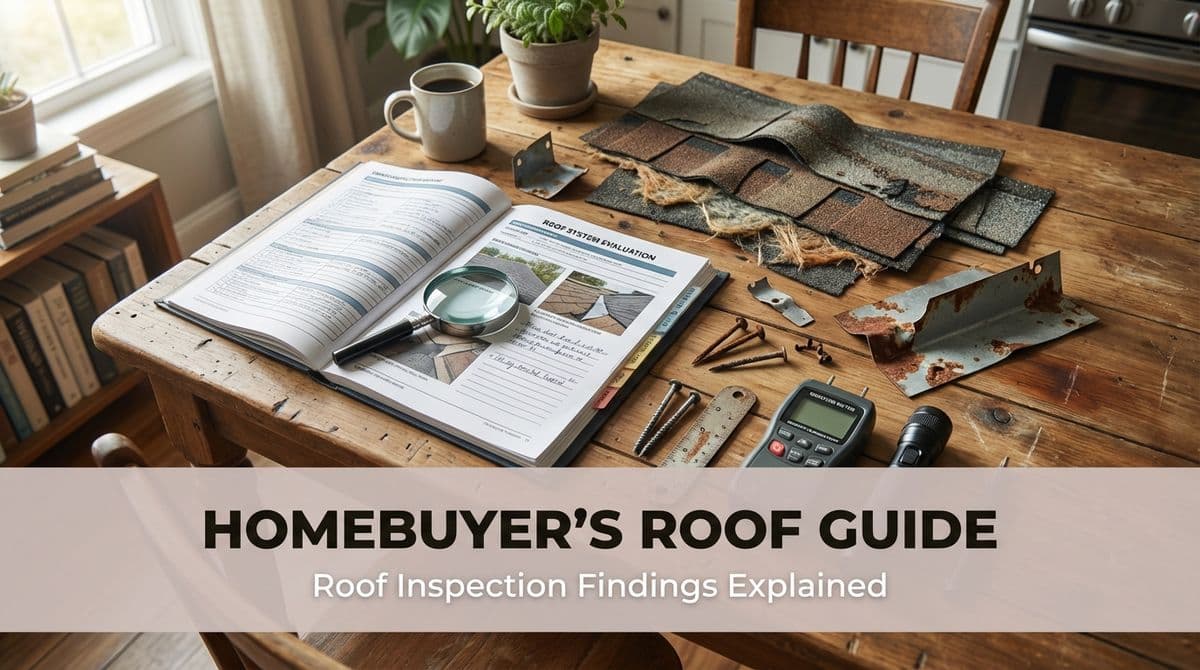
What a Roof Inspection Really Means During Your Option Period
We recently got a call from a homebuyer — we’ll call her Emily — who was under contract on a house and right in the middle of her option period. Her inspector had flagged several roofing issues: possible hail damage, very worn shingles, exposed ridge fasteners, and missing counter flashing.
Emily was worried: Did this mean the roof was about to fail? Was she buying a money pit? Or were these items normal wear that she could live with for a while?
We told her what we tell a lot of buyers in her situation: during the option period, roof findings aren’t just “bad news” — they’re information you can use to make a smart decision, negotiate repairs, or budget for future work.
Why Roof Findings Matter So Much in the Option Period
During your option period, you have a short window to decide whether to move forward, renegotiate, or walk away. The roof is a big part of that decision because it affects:
- Immediate risk of leaks and interior damage
- Insurance coverage and possible roof exclusions
- Upcoming costs for repair or replacement
In Emily’s case, the report sounded scary. But as we explained to her, the exact wording matters. Let’s break down the common terms we see in inspection reports and what they usually mean for a homebuyer.
“Evidence of Possible Impact Damage” and Hail Hits
Emily’s report mentioned “evidence of possible impact damage noted at one or more areas of the shingles,” plus photos of suspected hail damage. Inspectors use cautious language like “possible” and “one or more areas” because they’re not roofing specialists or insurance adjusters.
When we look at suspected hail damage, we focus on:
- Number and distribution of hits per test square
- Granule loss exposing the asphalt mat
- Bruising or soft spots when we press the shingle
- Broken or cracked shingles (not just cosmetic marks)
If we find only a few light marks with no real damage to the shingle surface, we usually consider it cosmetic. If hail has crushed granules, exposed black asphalt, or cracked shingles across large areas, that’s when we start talking about functional damage and potential insurance claims or major repairs.
How this affects you: hail findings can mean anything from “keep an eye on it” to “this roof may be near the end of its useful life.” A focused roofing inspection helps you know which situation you’re actually dealing with.
Very Worn Shingles: Normal Aging vs. End of Life
Emily’s inspector also noted that the shingles were “really worn.” That can cover a range of conditions. When we inspect worn shingles, we look for:
- Curled or cupped edges
- Bald spots where granules are mostly gone
- Cracking across the shingle surface
- Multiple previous repairs or patches
Every roof ages, and some wear is expected. The big question is: how much life is realistically left? Sometimes a roof looks tired but still has several years with minor maintenance. Other times, the wear is advanced enough that we recommend planning for replacement sooner rather than later.
How this affects you: worn shingles factor into your long-term budget. Even if there’s no active leak, you may want to negotiate a credit or price adjustment if the roof is near the end of its useful life.
Exposed Ridge Fasteners: Small Detail, Big Potential Problem
Emily’s report mentioned “ridge fasteners that are exposed.” On many roofs, the ridge cap shingles are nailed or screwed down. If those fasteners are left exposed with no sealant, water can slowly work its way in over time.
Here’s what we look for:
- Rusty or backed-out nails/screws along the ridges
- Cracked or missing sealant over fastener heads
- Signs of staining or leaks beneath those areas in the attic
The good news is that exposed ridge fasteners are usually very repairable. We can typically seal or replace fasteners and re-secure the ridge caps without major work.
How this affects you: exposed fasteners are more of a maintenance item than a deal-breaker. They’re worth fixing soon after you move in but rarely justify walking away from a home on their own.
Missing Counter Flashing and Other Flashing Concerns
Emily’s inspector also noted “counter flashing missing.” Flashing is the metal that keeps water from sneaking in where the roof meets walls, chimneys, or other transitions. Counter flashing is the top layer that overlaps base flashing to create a watertight seal.
When counter flashing is missing or poorly installed, we look for:
- Gaps where water can run behind the shingles
- Staining on siding or interior walls near those areas
- Improper caulking used where metal should be
Sometimes missing counter flashing is an easy fix; other times it requires opening up siding or masonry to install it correctly. The cost depends on how many locations are affected and how hard they are to access.
How this affects you: missing or bad flashing can cause leaks even if the shingles are in good shape. It’s an issue to take seriously and price out properly.
How to Use Roof Findings During Your Option Period
Once we inspected Emily’s roof, we put everything in plain language for her and gave her a written estimate. Here’s how we suggest buyers use that information:
- Clarify urgency: Separate true leak risks from long-term wear.
- Get real numbers: Ask for itemized pricing for repairs vs. full replacement, if needed.
- Share the report and estimate: Give both to your agent so they can negotiate repairs, credits, or price reductions.
- Ask about insurance: If hail damage is confirmed, you may want to know whether the seller has filed claims or if a future claim is realistic.
In Emily’s case, we found moderate wear, some repairable flashing issues, and a few areas of light impact that didn’t yet justify a full replacement. She used our report to negotiate a seller credit that covered the immediate repairs and set aside money for a future replacement down the road.
Need a Second Opinion on Your Inspection Report?
If you’re in your option period and staring at a roof section on your inspection report that sounds alarming, you don’t have to guess what it all means. We’re happy to review the findings, inspect the roof, and give you a clear, written explanation of:
- What’s urgent vs. what’s cosmetic
- Expected remaining life of the roof
- Repair vs. replacement options and pricing
The goal is simple: to give you the information you need to feel confident about your decision — whether that’s moving forward, renegotiating, or walking away.